

A high-quality gaming setup is no longer defined simply by owning a powerful console, a large television, or an expensive gaming monitor. Modern players increasingly focus on how every part of the setup works together. Display responsiveness, controller configuration, network stability, audio positioning, storage management, and room comfort can all influence the overall experience. Even small adjustments can make games feel smoother and more responsive without requiring an entirely new collection of hardware.
As gaming platforms continue to offer more customization options, setup optimization has also become more practical. Features associated with quikconsole can help players approach their gaming environment more systematically, particularly when they want to balance performance, convenience, and visual quality. Instead of changing settings randomly, gamers can evaluate individual parts of their setup and adjust them according to the type of games they play.
The goal of an optimized gaming environment is not necessarily to maximize every setting. A competitive multiplayer player may prioritize low input latency and stable frame rates, while someone playing cinematic single-player games may prefer higher visual quality and immersive audio. Understanding those differences makes it easier to create a setup that delivers consistent performance while remaining comfortable for longer sessions.
Why Gaming Setup Optimization Matters
Gaming hardware can only perform as well as the surrounding configuration allows. A capable console connected to a display with unsuitable settings may not deliver the responsiveness or image quality expected from the hardware. Similarly, a fast internet connection cannot completely compensate for poor Wi-Fi positioning, network congestion, or an unstable connection between the gaming device and router.
Setup optimization begins by identifying where performance is actually being limited. Players should consider whether their main problem is inconsistent frame delivery, delayed controls, image quality, audio clarity, storage limitations, or network instability. Once the bottleneck is identified, adjustments become more meaningful. This approach also prevents unnecessary spending because many improvements can come from configuration rather than purchasing new equipment.
Another important factor is consistency. A well-optimized setup should remain reliable across different gaming sessions. Automatic display modes, sensible controller configurations, organized storage, and appropriate network settings can reduce the amount of manual adjustment required every time a player starts a game.
Display Optimization for Better Gameplay
The display is one of the most noticeable components of a gaming setup because it directly affects how players perceive movement, detail, and responsiveness. Modern gaming monitors and televisions may support high refresh rates, low-latency modes, variable refresh technologies, HDR, and different image presets. However, enabling every available feature at once does not necessarily produce the best result.
For competitive games, reducing unnecessary image processing can be particularly useful. Television features designed for movies or general entertainment may introduce additional processing that increases perceived input delay. A dedicated gaming or low-latency mode can often provide a more responsive experience. Players should also verify that the console and display are configured to support the same resolution and refresh-rate capabilities rather than assuming the highest setting is automatically active.
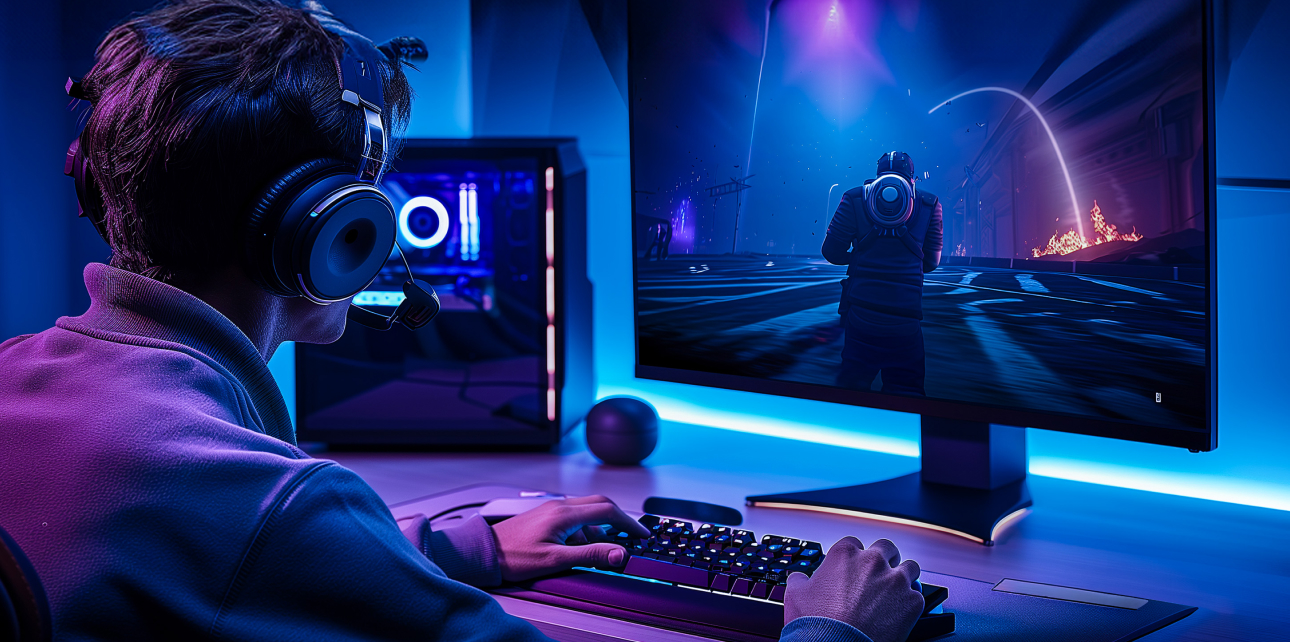
Brightness and contrast deserve attention as well. Excessively dark settings can hide important details in shadow-heavy environments, while excessive brightness can make highlights uncomfortable during long sessions. A balanced calibration helps preserve visibility without making the image look artificially bright.
Resolution, Refresh Rate, and Frame Rate
Resolution and refresh rate should be considered together. Higher resolution can improve image detail, while higher refresh rates can make movement appear smoother when the game produces enough frames to take advantage of them. The best combination depends on the game and hardware.
| Gaming Priority | Recommended Focus | Why It Matters |
|---|---|---|
| Competitive gaming | Low latency and high refresh rate | Helps make rapid movement and controls feel more responsive |
| Story-driven games | Resolution and HDR quality | Emphasizes visual detail and cinematic presentation |
| Fast action games | Stable frame rate | Creates smoother camera movement and gameplay |
| Mixed gaming | Balanced display mode | Provides a practical compromise between quality and responsiveness |
Players using quikconsole features as part of their optimization routine should think about these settings as a complete system rather than isolated options. A visually impressive configuration may not be ideal for a fast competitive title, while a low-latency configuration may sacrifice some visual richness that matters in a story-focused game.
Controller and Input Optimization
Controller configuration is another major part of gaming performance. Button layout, sensitivity, trigger response, vibration intensity, and stick behavior can all influence how naturally a player interacts with a game. A configuration that feels comfortable for one genre may feel inefficient in another.
Competitive players often benefit from creating control schemes that reduce unnecessary hand movement. Frequently used actions can be placed where they are easy to access, while sensitivity should be adjusted gradually instead of dramatically. A small change can significantly affect aiming or camera control, so players should test adjustments over several matches rather than judging them immediately.
Input devices should also be maintained physically. Dust around buttons or analog sticks, damaged cables, worn grips, and low battery levels can create problems that software adjustments cannot solve. Keeping controllers clean and properly charged is a simple but important part of setup optimization.
Improving Network Performance
A stable network connection is essential for online gaming, particularly when games depend on precise timing between players and servers. Download speed receives considerable attention, but latency, packet loss, and connection stability can be equally important. A connection with high download capacity can still produce frustrating gameplay if it frequently experiences interruptions.
Whenever practical, connecting the gaming system through Ethernet can provide a more consistent connection than wireless networking. For players who rely on Wi-Fi, placing the router in a suitable central position and reducing unnecessary obstacles can help. Network congestion should also be considered because simultaneous streaming, large downloads, and multiple connected devices can compete for bandwidth.
Gaming platforms and quikconsole-related workflows can be used more effectively when network conditions are stable. Players should avoid changing multiple network settings without understanding their purpose. Instead, they can first identify whether the problem is latency, packet loss, wireless interference, or general congestion.
Audio Optimization for Immersion and Awareness
Audio is sometimes treated as an optional part of gaming optimization, but it can have a substantial effect on gameplay. Directional sound can provide information about approaching opponents, environmental activity, vehicles, weapons, and other events that may not be visible on screen.
Headsets can be particularly useful in competitive games because they place sound closer to the player and can make directional cues easier to recognize. However, maximum volume is not the goal. Excessive volume can make long sessions uncomfortable and may reduce the clarity of individual sounds when everything becomes overly loud.
For single-player experiences, a balanced speaker or headset setup can make dialogue, music, environmental effects, and cinematic moments more engaging. Players should also check whether their games provide separate sliders for dialogue, music, effects, and voice chat. Adjusting these individually can produce a cleaner soundscape than simply increasing the master volume.
Storage and Game Library Management
Modern games can require substantial storage space, and frequent updates can make available capacity disappear quickly. Running close to the storage limit can also make game management more difficult, especially for players who regularly switch between large titles.
A practical storage strategy involves keeping frequently played games readily available while removing titles that have not been used for an extended period. Cloud saves or platform-supported backup systems can provide additional convenience when supported. Players should also allow sufficient free space rather than treating every available gigabyte as usable storage.
A clean library makes the entire gaming experience more efficient. Instead of spending time searching through unused titles, players can organize their frequently played games and applications so that the content they actually use remains easy to access.
Creating a Comfortable Gaming Environment
Performance optimization should not come at the expense of comfort. Gaming sessions can become lengthy, and an uncomfortable chair, poor monitor height, inadequate lighting, or badly positioned peripherals can create unnecessary fatigue.
The screen should generally be positioned so that the player does not need to constantly tilt the head upward or downward. The keyboard, controller, or other input device should remain within a comfortable reach. Lighting should reduce harsh reflections without making the room completely dark.
A few practical improvements can make a noticeable difference:
- Keep the primary screen at a comfortable viewing height.
- Maintain enough distance from the display for relaxed viewing.
- Use suitable lighting to reduce distracting reflections.
- Keep frequently used accessories within easy reach.
- Allow ventilation around gaming hardware to reduce heat buildup.
These changes are especially useful because they do not depend on buying premium equipment. A well-arranged room can often provide a more comfortable experience than an expensive setup that has been poorly positioned.
Managing Performance Without Overcomplication
One common mistake in gaming setup optimization is changing too many settings at once. When multiple variables are modified simultaneously, it becomes difficult to determine which adjustment actually improved the experience.
A better approach is to make one meaningful change at a time. For example, a player experiencing sluggish controls might first activate a low-latency display mode. If the issue remains, controller settings can then be examined. If online matches continue to feel inconsistent, network performance can be investigated separately.
This gradual approach also makes it easier to return to a previous configuration. Keeping a simple record of important settings can be useful when switching between games or displays. quikconsole can fit into this broader approach by serving as part of an organized process for managing and refining the gaming experience rather than treating optimization as a one-time task.
Optimizing Settings for Different Gaming Genres
Different genres place different demands on gaming hardware and player controls. Competitive shooters often benefit from responsiveness, stable frame rates, clear directional audio, and carefully tuned sensitivity. Racing games can benefit from smooth frame delivery and appropriately configured steering or controller controls. Strategy games may place greater emphasis on screen clarity and comfortable interface navigation.
Role-playing and adventure games often reward visual quality and immersive audio more than extremely aggressive latency-focused configurations. Players should therefore avoid copying another gamer’s settings without considering their own preferences and hardware.
The most effective setup is one that supports the games the player actually enjoys. A technically impressive configuration may still be inconvenient if it makes controls uncomfortable or sacrifices visual features that matter to the player’s preferred genre.
Using a Practical Optimization Routine
A repeatable optimization routine can keep a gaming setup performing consistently. Start with hardware connections, then check display settings, controller behavior, network stability, audio, storage, and physical comfort. This sequence makes it easier to identify problems before moving on to more advanced adjustments.
Players can also revisit their configuration whenever they purchase new hardware, install a major system update, or begin playing a game with substantially different requirements. Gaming technology continues to evolve, so a setup that worked perfectly several years ago may not take advantage of newer display, networking, or input capabilities.
The important principle is to optimize for actual use rather than specifications alone. quikconsole can be incorporated into this process as players evaluate available features and organize their preferred configuration around performance, convenience, and personal gaming habits.
Conclusion
Advanced gaming setup optimization is ultimately about creating a balanced environment in which hardware, software, connectivity, controls, audio, and comfort work together. Expensive equipment can certainly expand the available possibilities, but careful configuration often produces meaningful improvements without requiring major upgrades. Players should begin with the areas that affect their experience most directly. Display responsiveness, stable frame rates, controller settings, reliable networking, clear audio, organized storage, and ergonomic positioning all contribute to a stronger gaming environment. By testing changes gradually and keeping configurations suited to individual genres, gamers can avoid unnecessary complexity.

