

Digital gaming has changed the way players purchase, download, store, and access their favorite titles. Instead of buying a physical disc or cartridge from a retailer, players can purchase a game through a digital storefront and download it directly to a console or computer. The process is convenient, fast, and increasingly common, but it also introduces an important concept that many players overlook: a digital game purchase usually involves a license to access software rather than traditional ownership of a physical product. Understanding this distinction can help gamers make better purchasing decisions and avoid confusion when changing consoles, using different accounts, playing offline, or dealing with discontinued services.
The licensing system can appear complicated because different platforms use different terminology and technical rules. A digital purchase may be connected to a user account, a specific device, a home console, or a combination of these elements. Subscription services can introduce another layer because access may depend on an active membership rather than a permanent purchase. Current platform systems also increasingly use online verification, account authentication, virtual game cards, and device-based entitlements. Guidance from quikconsole can help players understand these concepts in practical terms without getting lost in technical language.
What Is a Digital Game License?
A digital game license is essentially the permission associated with an account or device that allows a player to access a particular game. When a player completes a digital purchase, the storefront records an entitlement that confirms the account has rights to use the product under the applicable terms. The actual game files may be downloaded to the console, PC, or other supported device, but possessing those files does not necessarily mean the player can use them without the associated license being recognized.
This distinction explains why deleting a purchased game does not normally mean losing it permanently. The software files can be removed to free storage, while the entitlement remains associated with the purchasing account. When the player downloads the game again from the appropriate store, the platform can verify the existing entitlement and permit access. Microsoft, for example, describes digital goods as licensed rather than sold and uses both user-based and device-based licensing models for supported Xbox content.
Digital Purchase vs. Traditional Ownership
One of the biggest misunderstandings surrounding digital gaming is the difference between purchasing a game and owning a physical copy. When someone buys a physical disc, the disc itself is a tangible object that can generally be stored, traded, sold, or given to another person subject to applicable laws and platform requirements. Digital games operate differently because the player receives access under a license agreement.
That does not make a digital purchase meaningless. A purchased digital game can remain available to the account for years, and many players appreciate the convenience of having an entire library accessible without changing discs. However, the rights connected to the purchase are governed by the platform’s terms. Players should therefore think of a digital purchase as acquiring a durable right to access software under specified conditions rather than acquiring an unrestricted digital object that can always be transferred like a physical disc.
How Account-Based Licensing Works
Account-based licensing is one of the most important foundations of modern digital game distribution. When a player buys a game, the storefront normally records the transaction against the account used during the purchase. If the same player purchases a new console and signs into that account, the platform can recognize the previously acquired entitlement and allow the player to download eligible games again.
This approach provides significant convenience. Players do not necessarily have to carry physical media from one compatible device to another. Their library can follow their account, provided the new hardware supports the game and the platform continues to provide access. The account therefore becomes an important part of the player’s digital library.
Device-Based and Home Console Licenses
Some gaming ecosystems combine account-based rights with device-based licensing. A designated home or primary console may receive an offline-capable license that allows other profiles using that device to access certain purchased games. This is particularly useful in households where several people use the same console.
![Qualcomm Dual 8 Elite Chips Land Sept 22: Handhelds Next [2026] – Tech Insider Canada](https://tech-insider.org/ca/wp-content/uploads/sites/7/2026/09/qualcomm-dual-8-elite-gen-6-handheld-gaming-2026-1.webp)
The important point is that this sharing mechanism does not necessarily mean every user owns the game independently. Instead, the platform is recognizing that the purchasing account has established a device where certain rights can be shared. Microsoft documentation, for example, explains how Xbox home-console licensing can allow other users on the designated console to use content under the device license, while the purchasing account can also use its user license elsewhere under applicable conditions.
Offline Gaming and License Verification
Offline play is another area where digital licensing can become confusing. Some purchased games can be played without an active internet connection after the required license information has been established. Other games may require periodic online verification, particularly when their licensing model depends heavily on account authentication or connected services.
A player should therefore avoid assuming that every digitally purchased game will behave exactly like a physical game when the internet is unavailable. Some platforms provide designated home-console or offline-device systems specifically to make certain digital content available offline. Microsoft documentation notes that offline-capable licensing can be associated with designated devices, while some restrictive licensing models can require periodic online verification.
Why Internet Verification Exists
Online verification is not simply a restriction designed to inconvenience players. From the platform’s perspective, it can help confirm that a user has a valid entitlement, prevent simultaneous unauthorized use, support subscription services, and manage licenses across multiple devices. However, it can create practical limitations for players who have unreliable internet connections or want long-term offline access.
Before purchasing a game that is expected to remain playable for many years, checking whether it has an always-online requirement can therefore be useful. This is particularly relevant for games that depend heavily on online servers, authentication systems, multiplayer infrastructure, or cloud-based services.
Digital Games, Subscriptions, and Temporary Access
Not every game appearing in a digital library has been permanently purchased. Subscription services can provide access to large libraries for a recurring fee, but the player’s right to play a particular title may depend on the subscription remaining active and the game continuing to be included in the service.
The following table summarizes the basic differences.
| Access Type | Typical License Relationship | What Players Should Understand |
|---|---|---|
| Digital Purchase | Linked primarily to a user account or platform entitlement | Usually remains available under applicable store terms |
| Subscription Access | Connected to an active membership and catalog availability | Access may end when the membership or catalog eligibility ends |
| Device Sharing | License can be shared through an eligible primary or home device | Rules vary by platform and account configuration |
| Disc-Based Access | Access may depend on possessing the physical disc | The disc can act as proof of eligibility for supported games |
| Online Service Game | Access can depend on servers and account authentication | Server shutdowns may affect functionality or playability |
Understanding this difference can prevent disappointment when managing a large library. quikconsole recommendations encourage players to distinguish between games they have directly purchased and games they are accessing through a service.
What Happens When a Game Is Delisted?
Game delisting is one of the biggest reasons digital licensing deserves attention. A publisher or platform may remove a game from a digital storefront for business, licensing, technical, or contractual reasons. Once a title is delisted, new customers may no longer be able to purchase it through the normal store.
However, delisting does not necessarily mean that every existing license immediately disappears. In many situations, players who previously acquired a valid license can continue downloading or using the game, subject to the applicable platform terms and technical requirements. The situation can become more complicated when a title depends on online servers or third-party services.
Digital Licenses and Game Sharing
Game sharing can be convenient, but it should not be confused with transferring ownership. Modern platforms often provide official family, home-console, or device-sharing mechanisms. These systems are designed to let eligible users access games under defined conditions.
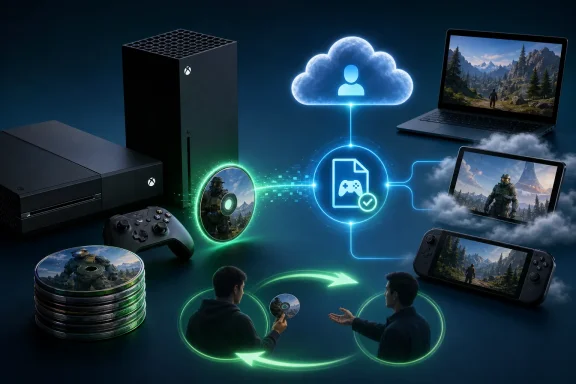
For example, a purchasing account may designate a particular console as its home device, allowing other users on that console to access supported purchases. However, using a purchasing account on another console can trigger different rules, including requirements for the owner to remain signed in or connected. Microsoft documentation describes these differences between offline device licenses and roaming licenses.
Practical Checks Before Buying
Before spending money on a digital game, a player can make a few simple checks:
- Confirm the game is being purchased from the intended account and platform.
- Check whether the title requires an internet connection.
- Understand whether access is permanent purchase access or subscription-based.
- Review compatibility before buying for a different console or device.
These checks take only a few minutes but can prevent common misunderstandings later.
What Happens When You Change Consoles?
Changing consoles does not automatically erase a digital library. In most ecosystems, players can sign into the same account on compatible replacement hardware and redownload eligible purchases. However, the process may involve activating a new primary or home device, transferring data, reconfiguring licenses, or connecting to the internet for verification.
Players should pay attention to the platform’s rules before selling an old console. If the old device is still designated as a primary or home console, changing that status may be necessary. Account credentials should also be removed from hardware that is being sold or given away.
Digital Licensing and the Future of Gaming
The gaming industry is becoming increasingly digital, making licensing systems more important than ever. Modern platforms are experimenting with account-based libraries, virtual game cards, cross-platform entitlements, cloud gaming, subscription catalogs, and systems that connect physical media with digital licenses.
Recent developments illustrate how flexible licensing models are becoming. Microsoft’s current Xbox ecosystem, for example, includes multiple forms of entitlements and licensing, while Nintendo’s newer systems provide online licensing functionality for downloaded software across supported consoles.
At the same time, physical media remains relevant because it can provide a different form of access and preservation. The industry is therefore not simply moving from one model to another. Instead, players are encountering a mixture of physical ownership, digital entitlements, subscriptions, online verification, and cloud-based services.
How Players Can Protect Their Digital Libraries
Protecting a digital game collection begins with protecting the account connected to it. Players should use strong account security, avoid sharing credentials unnecessarily, and keep recovery information current. They should also understand which account actually purchased important games, particularly in households where several profiles use the same console.
Keeping track of purchased games can also be useful. A player with a large library may forget whether a particular title was purchased directly or obtained through a subscription. Understanding the difference can save time when troubleshooting access problems.
Common Misunderstandings About Digital Licenses
Many licensing problems arise because players use the word “ownership” to describe several different things. Having a game installed means the files are stored on a device. Having an entitlement means the platform recognizes a user’s right to access the product. Having a subscription means access may depend on an active service. These concepts overlap, but they are not interchangeable.
Another misunderstanding is that deleting a digital game deletes the purchase. Normally, removing the installed files only removes the local copy. The account can continue to retain the entitlement, allowing the game to be downloaded again if the platform still supports that access.
Conclusion
Digital game licensing is an essential part of modern gaming, even though most players rarely think about it when pressing the purchase button. A digital game is more than a collection of downloaded files. Access can depend on an account entitlement, device authorization, home-console settings, subscription status, online verification, or a combination of these systems. Understanding these relationships makes digital libraries easier to manage and reduces confusion when changing consoles or troubleshooting access.

